


Some time ago, a question came up in one of our discussions: what do we know about recovery from muscle weakness, or paresis, caused by a lumbar disc herniation?
Progressive weakness and symptoms suggesting cauda equina syndrome are considered indications for urgent surgery. When these are absent, paresis can be treated with surgery or conservative care, and while in some cases surgical intervention seems to ease the symptoms faster, the two approaches produce roughly similar outcomes at long-term follow-up.
The question was soon refined: what do we really know about how recovery unfolds in patients with paresis, or in musculoskeletal conditions more broadly, between scheduled assessments in clinical trials?
Much of our knowledge comes from standardised questionnaires administered at predefined time points. They cover pain, general function and everyday activities, helping us estimate when a condition should no longer substantially limit the average patient’s daily life. These broad estimates rarely answer the questions patients actually want answers to.
A patient may want to know whether they can play in the company tennis tournament next month. Another might be wondering whether they can look after an energetic grandchild for the weekend eight weeks from now.
To answer such questions, we draw on existing research or clinical experience. The Shoulder Pain and Disability Index, for example, asks about difficulty putting on an undershirt or pullover sweater. This indicates general shoulder function but has limited relevance to an overhead tennis serve four weeks later. Clinical experience fills some gaps, although even the most experienced orthopaedic surgeon has seen only a finite number of patients with the same condition, background and preferred activity.
Patients themselves could provide much of the missing information by describing how their condition affects activities that matter to them. These reports could form a personal recovery diary, reduce recall bias and make fluctuations easier to recognise. With enough participants, the diary data could reveal recovery patterns among people with similar backgrounds, injuries and activities. This could give patients a more precise picture of how their own recovery may progress, while their own updates would make that picture clearer for those who come after them. That information could also assist patients in forming realistic expectations and maintaining confidence in their recovery.
.png)
The practical problem is time. Healthcare professionals cannot collect and document frequent updates from every patient. Asking patients to repeatedly log in to a system and write detailed accounts is not much better, as enthusiasm tends to fade once every update starts to feel like homework.
That problem gave rise to a simple idea: artificial intelligence could make the workload manageable. Many ambitious healthcare AI projects ask AI to be a wizard and produce diagnoses, predictions or new knowledge from incomplete or overly general data. We decided to try putting it to work one step earlier, using it to collect the detailed information that is currently missing.
An AI-assisted interviewer could do this by asking patients regularly about their symptoms, function and personally important activities. Patients could answer through a natural conversation, and the information could be collected in a consistent format.
Putting the Idea to the Test
First, we wanted to assess whether the follow-up conversations could be automated and how users would feel about such a tool.
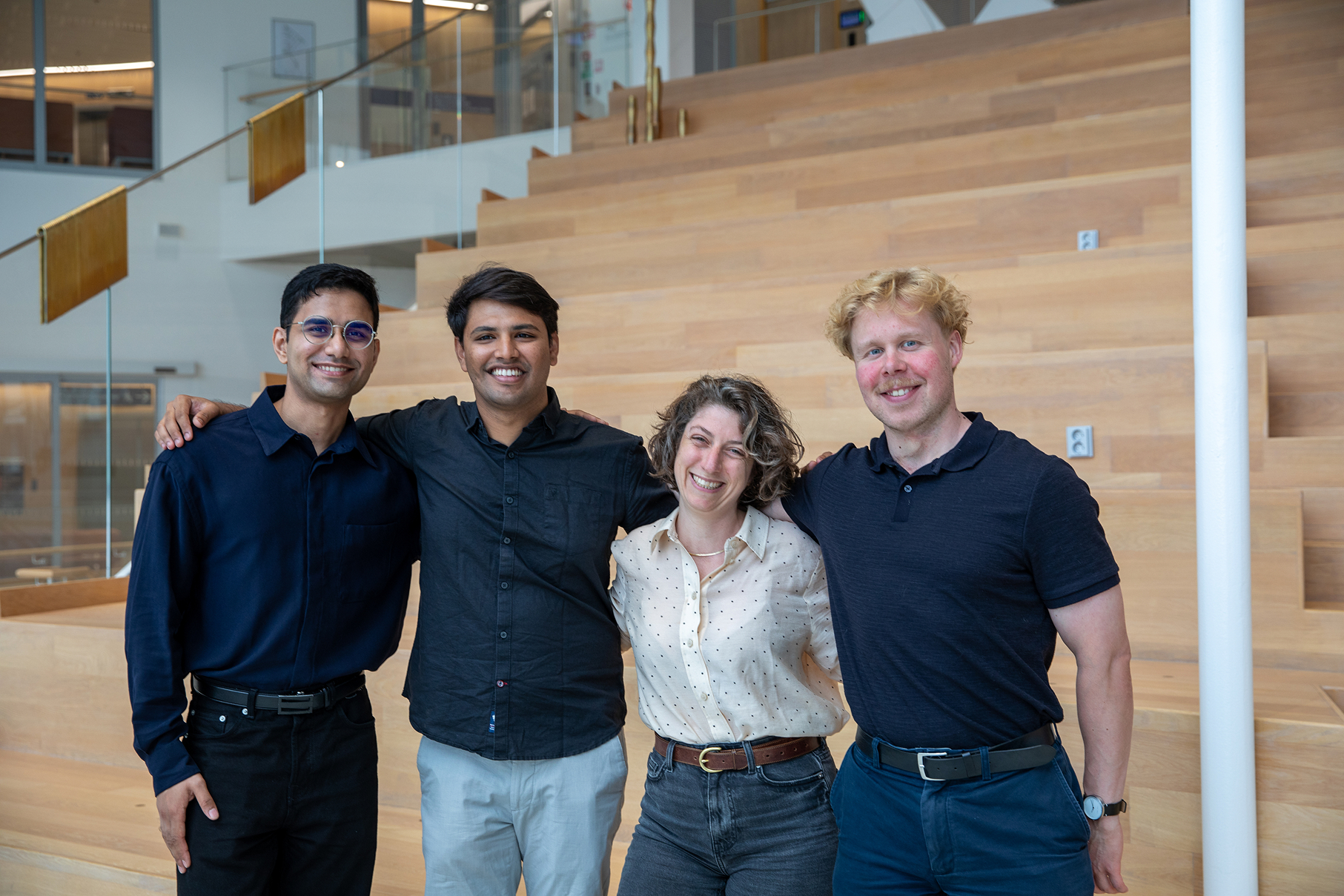
We began developing the idea further with master’s students from Aalto University’s International Design Business Management programme as part of their semester-long Capstone project. The students brought expertise from a variety of fields to the project: healthcare, business, user experience design and technology.

During the Capstone project, the team reviewed existing work on AI and patient follow-up, interviewed people with musculoskeletal conditions about their attitudes towards using AI in this context, and developed a proof-of-concept version for them to test. The feedback identified what worked, what was unclear and what needed improvement.
After the student project, several team members continued development over the summer and completed a prototype suitable for users to try on their own. Ten healthy volunteers then talked with the AI agent several times over a one-week period and provided invaluable user feedback, which is now guiding the next phase of development during autumn 2026.
The next step is to prepare the tool for testing with patients. There will undoubtedly be more challenges before it is ready, but we believe they can be overcome. After all, the idea itself is almost ridiculously simple: let AI ask the right questions, listen and keep track of the answers. If done well, it could benefit patients and professionals alike. And the best part? No black magic required.


Stay up to date
Follow FICEBO on social media to stay in the loop with our latest updates.
