


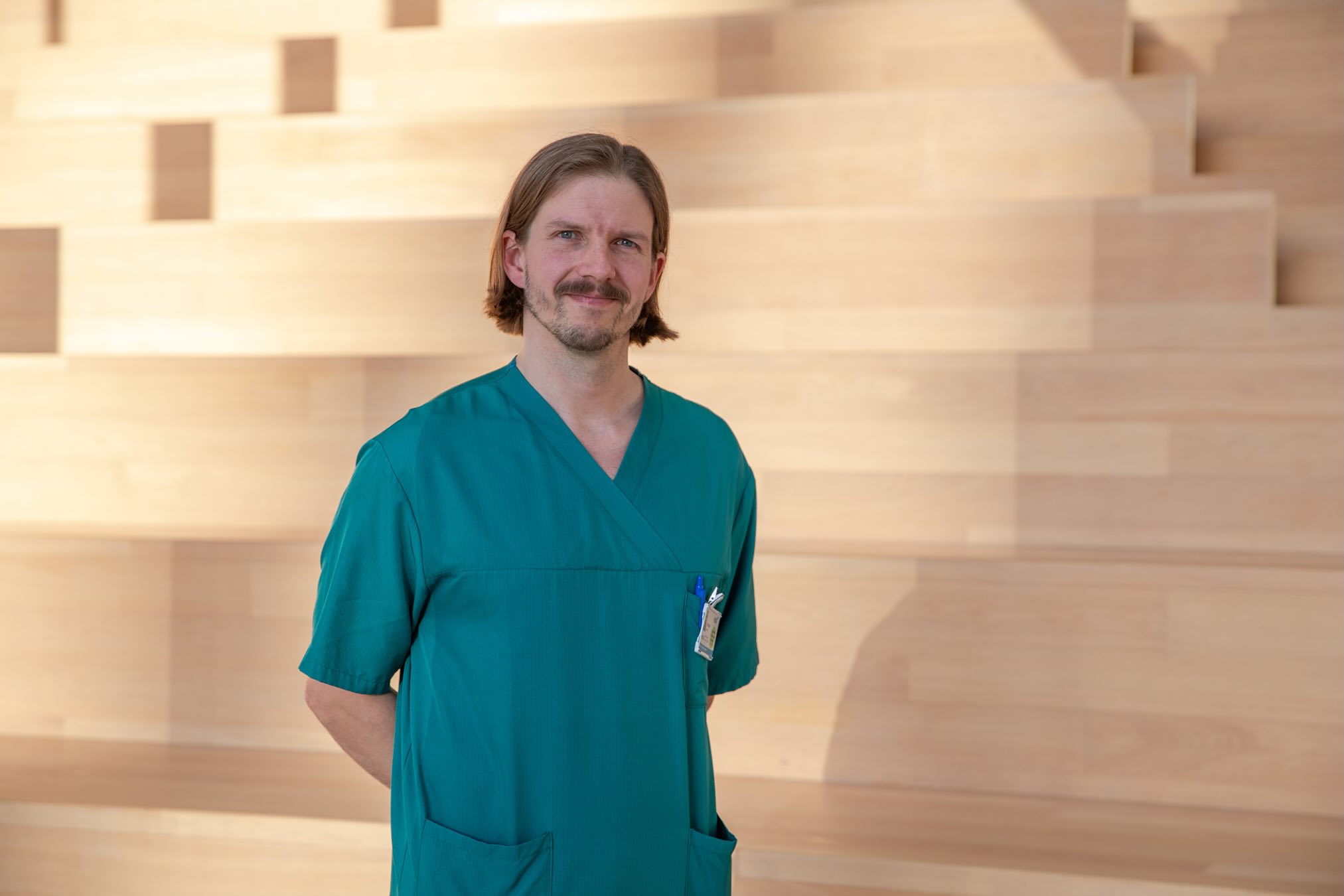
(The following is condensed from an interview with Dr. Roope Kalske in the spring of 2026)
By Alan Cassels
It’s a big year for Dr. Roope Kalske. In 2026 everything seems to be coming together nicely for the spinal surgeon, researcher, PhD candidate, husband and father who appears to be at the pinnacle of his career; And he’s only 37 years old!
In the near future Roope will complete one of the most important milestones in his career, his PhD thesis. It is coming on the tail end of the publication of the ten-year results of the FIDELITY project which has been the subject of his thesis work for a long time.
He told me from his office in Helsinki that he’s been involved with FIDELITY since the project’s five-year follow-up, and he’s been very excited to finally see that the ten-year summation of that study being published this year.
I asked him what it was like to be so intimately involved with this landmark trial that has helped put FICEBO on the world map of orthopaedic research. His face shines as he tells me he’s very pleased to see the light at the end of the tunnel, which is the culmination of so much work that has gone into his PhD thesis.
With FIDELITY, the main research question being examined in this RCT is whether the meniscectomy group develops more progression of degeneration than the placebo group, ten years after the patients underwent the surgery. He said “there was more osteoarthritis after five years, but it was not statistically significant. But after ten years, there is a statistically significant harm signal.”
He added: “We’re seeing statistically significant findings regarding knee symptoms—basically how the patients are doing. In addition, even if not reaching statistical significance, all other outcome markers, both clinical and radiographic seem to favor the placebo group. “
“It seems APM (Arthroscopic partial meniscectomy) is not only futile but harmful. This is definitely a big step, because Fidelity is the first placebo-controlled RCT that proves this,” he added.
One of other major parts of his PhD is his immersion into the world literature and evidence on APM. He’s essentially been soaking in every bit of literature from the early 20th century that he can get his hands on. Like many routinely done orthopaedic procedures he was surprised what he found.
“There never was any evidence!”
He explained what he found in the literature: “In the 1940s and 50s surgeons preformed open arthrotomy and removed the torn meniscus in whole. In the upcoming decades, the evidence that came out was not very compelling as it only showed that it is worse to remove the whole meniscus, versus removing less of it. After technological development, such as arthroscopy and MRI scans in the 70s and 80s, most of the published research were small case series of patients doing well in the short-term. From there on, APM started to gain widespread popularity. “
His conclusion: “This is not really evidence that tells APM is good treatment for meniscal tears. After the early days and promising case series, we have seen many RCTs and systematic reviews comparing APM with non-operative treatment or placebo surgery that show no benefit of APM. “
Even with mounting evidence speaking against APM, proponents of APM have proclaimed that there are signals of benefit in short-term follow-ups, and some have still argued that APM might be a cost-effective treatment strategy. But he explains why the whole body of evidence speaks against that.
“If there was a real short-term benefit, you’d likely see it in the productivity costs. If they [the patients] got back to work earlier, you’d see it in productivity. Current evidence on cost-effectiveness of APM can’t verify this assumption, so, the cost-effectiveness argument doesn’t hold.” He reminds me that this is “the driving matter in Finland.”
I wanted to dig further into what cost-effectiveness means, and he explained it very simply and thoroughly:
“We mean that we are comparing two treatment strategies. It is not just effectiveness that is floating around, it’s always cost-effective as compared to something else. When you compare it to alternative strategies, it is cost-effective if it results in higher quality of life, or the same quality of life but with lower costs. Both factors contribute to the assessment of cost-effectiveness.”
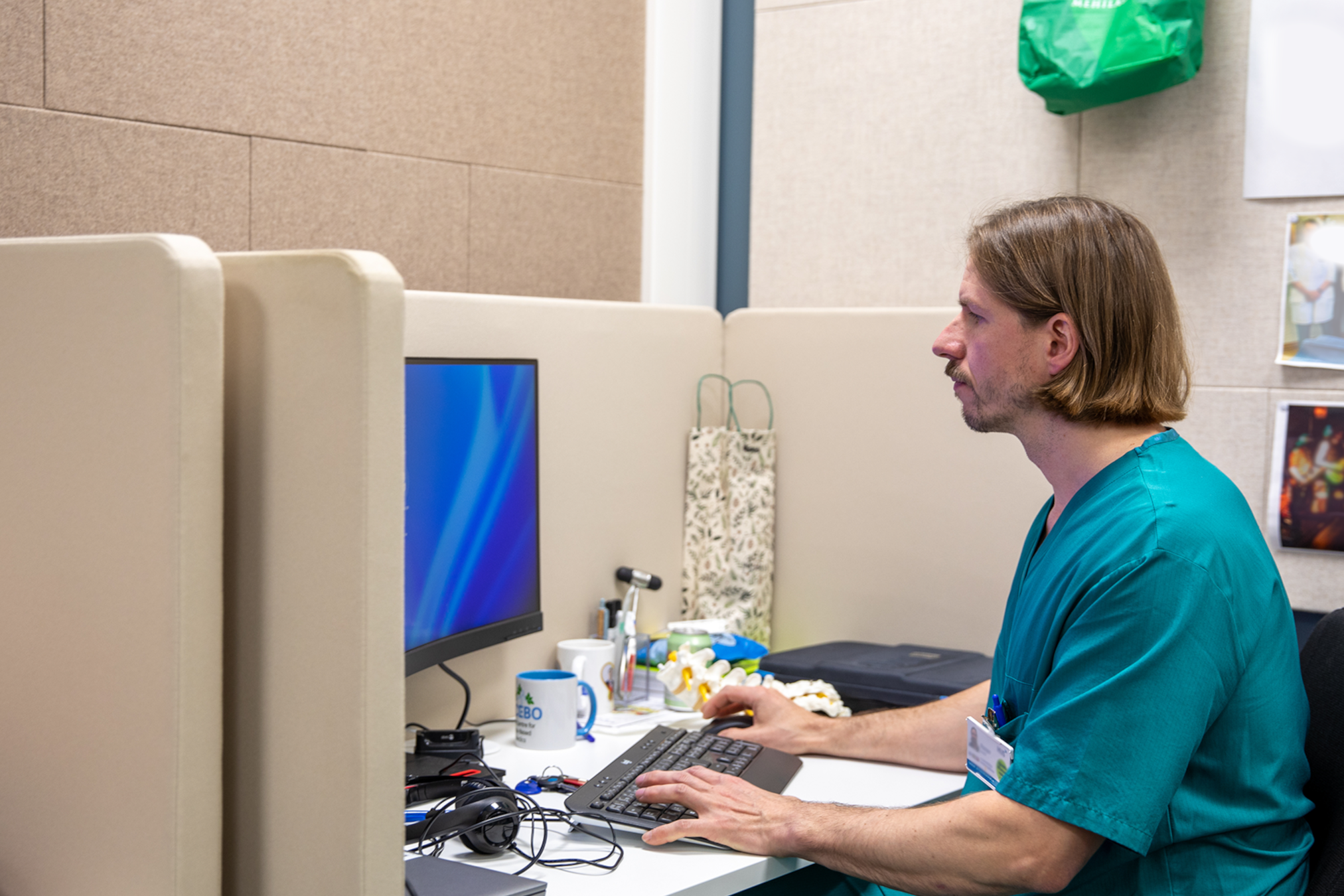
It’s hard to believe that Roope has had time to do this work. He’s been an orthopaedic surgeon for about three years, and his clinical work doing spinal surgery keeps him busy.
I asked him what it was like to be so close to seeing the end of this huge amount of vital work consisting of the statistical analysis plan for FIDELITY at five and ten years, the cost-effectiveness analysis based on the two-year results and the ten-year results paper.
He said he was so close to his thesis “he can almost taste it.”
In his early days working with FICEBO, Roope was involved in osteoporosis, and was one of the key organizers of the “Show more Spine” campaign. Once he’s defended his PhD, he will again be back and focusing on spinal research.
If everything goes according to his plan, he’ll be defending his thesis in the beginning of 2027. After this huge weight is lifted off his shoulders he’s also looking forward to having the possibility to develop his own projects and he hopes that he will soon be able to apply for his own research grants.
On the personal side, Roope is a very busy guy, with a wife and four children, ranging from 3 to 18. After spending time with Roope, I am left in awe of his energy, his commitment and his cheerfulness with so many responsibilities. FICEBO is very lucky to have Roope as part of their team.


Stay up to date
Follow FICEBO on social media to stay in the loop with our latest updates.
