



“When you don’t know exactly what to do, the best thing is to run a randomized trial.”
That’s the perspective of Dr. Teppo Järvinen, an orthopaedic researcher who leads FICEBO, the Finnish Centre for Evidence-Based Medicine, based in Helsinki.
Just this week FICEBO researchers were involved in a pivotal trial published in the BMJ that will help optimize the treatment of people with unstable ankle fractures.
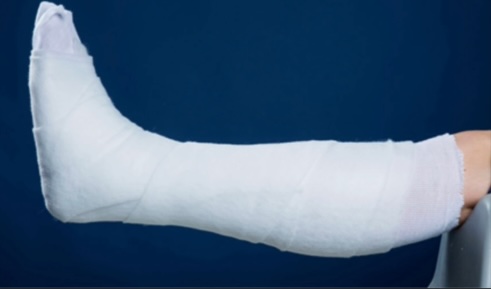
Finnish researchers from Oulu University Hospital set out to assess whether cast immobilisation is comparable (“non-inferior”) to surgery in adults with Weber B ankle fractures deemed unstable.
Between January 2013 and July 2021, they enrolled 126 participants aged 16 years or older with an unstable Weber B ankle fracture at a specialist university hospital trauma centre in Finland. With random assignment, 62 patients received conventional cast immobilisation for six weeks and 64 were assigned to undergo surgery followed by cast immobilisation for six weeks.
After two years participants were assessed using the standard measurement tool, the Olerud-Molander Ankle Score (OMAS, a validated patient-reported functional outcome instrument),as well as assessments for ankle function, pain, health related quality of life, ankle range of motion and x-rays. Treatment related adverse events were also recorded.
There was no statistically significant between-group differences seen in any of the other outcomes and overall, fewer treatment related harms occurred with cast immobilisation compared with surgery.
While this is a single hospital study and may not be generalizable across all jurisdictions, it was a thorough analysis with sufficient follow up. Essentially, these findings, along with those of previous studies show that conservative, non-surgical management of ankle fractures might be the wave of the future.
Dr. Kortekangas, the lead author of the SUPER-FIN trial, said: “We found that wearing a cast for six weeks appears to be just as good as surgery for healing unstable ankle fractures.” He added that “surgery always involves some level of harm, even if small. If equal outcomes could be had without surgery, that would be the way to go.”
“Surgery always involves some level of harm, even if small. If equal outcomes could be had without surgery, that would be the way to go.”
Before this trial, some reviewers claimed that the trial is outdated and possibly unnecessary, asserting that surgery is no longer performed for these fractures. So, to verify the claim that SUPER-FIN was outdated, FICEBO investigators carried out another study across six Euorpean nations.
This study was published last year examined practice patterns of the treatment of these very fractures and found that the practices varied sixfold across six European countries. For example, the rates in Finland were almost three times higher than those in England, even though the Finns consider themselves quite conservative.
Practice variation is a concept medical services research that has been studied since the 1970's. When variation cannot be explained by variations in patient illness, preferences, or adherence to evidence-based guidelines then they are likely due to practice factors, such as different physician cultures, clinician preferences and health system resources, including reimbursement. The differences seen in the rates of surgery for unstable Weber B fibular fractures across six European countries is likely due to local medical practices and surgeon preferences.
“The bottom line,”says Dr. Järvinen “is that if there is major variations in care, there is possibly a lot of uncertainty. Proper randomized trials, as we carry out, can reduce that uncertainty.”

An earlier study, Kortekangas et al. in the BMJ in 2019, found that three weeks of cast immobilization was not inferior to conventional six week immobilization in treating isolated stable Weber B type fracture.
Today's publication of this new SUPER-FIN study happened with FICEBO's assistance, who were on hand to advise the Oulu researchers in first publishing the SUPER-FIN protocol. Once the data was all collected, and analyzed, SUPER-FIN was ready to be published.
Now that the SUPER-FIN trial has been published, this pair of studies completes the circle on management of both stable and unstable Weber B fractures.
FICEBO is one of the leading organizations in the world carrying out randomized trials of orthopaedic procedures.
More can be found at their website at www.FICEBO.com
For further information:
Professor Teppo Järvinen, MD, PhD
Email: teppo.jarvinen@helsinki.fi
Tel:+358-400-246-426


Stay up to date
Follow FICEBO on social media to stay in the loop with our latest updates.
